Support our campaign
Your contribution will allow us to continue this campaign until the last consequences.
poor hygienic conditions and inefficient waste management in industrial farms can proliferate bacteria such as salmonella and E. coli, as well as creating the conditions for diseases such as swine fever (H1N1) and bird flu .
Attempts are made to keep animals on massive amounts of antibiotics, but that hasn't prevented their diseases from spreading to the human population.
The loss of biodiversity and the concentration of large numbers of animals in deplorable conditions is the main reason why the question scientists are asking is not whether there will be a new pandemic, but when we will experience it.
The excessive consumption of antibiotics through meat and dairy products results in the appearance of bacteria increasingly resistant to known treatments. And this is a danger for which humanity is not prepared.
This is especially worrying in Spain< /a>, since it is the European Union country where the most antibiotics are used in livestock farming, specifically 402 milligrams for every kilo of meat produced, an amount four times higher than that used in Germany and almost six times higher than that of France.
60% of all diseases and 75% of all emerging infectious diseases are zoonotic. Most of these come from the meat industry, including chickens, cows, and pigs.
At least 2.2 million people die strong> each year of zoonotic diseases in the world.
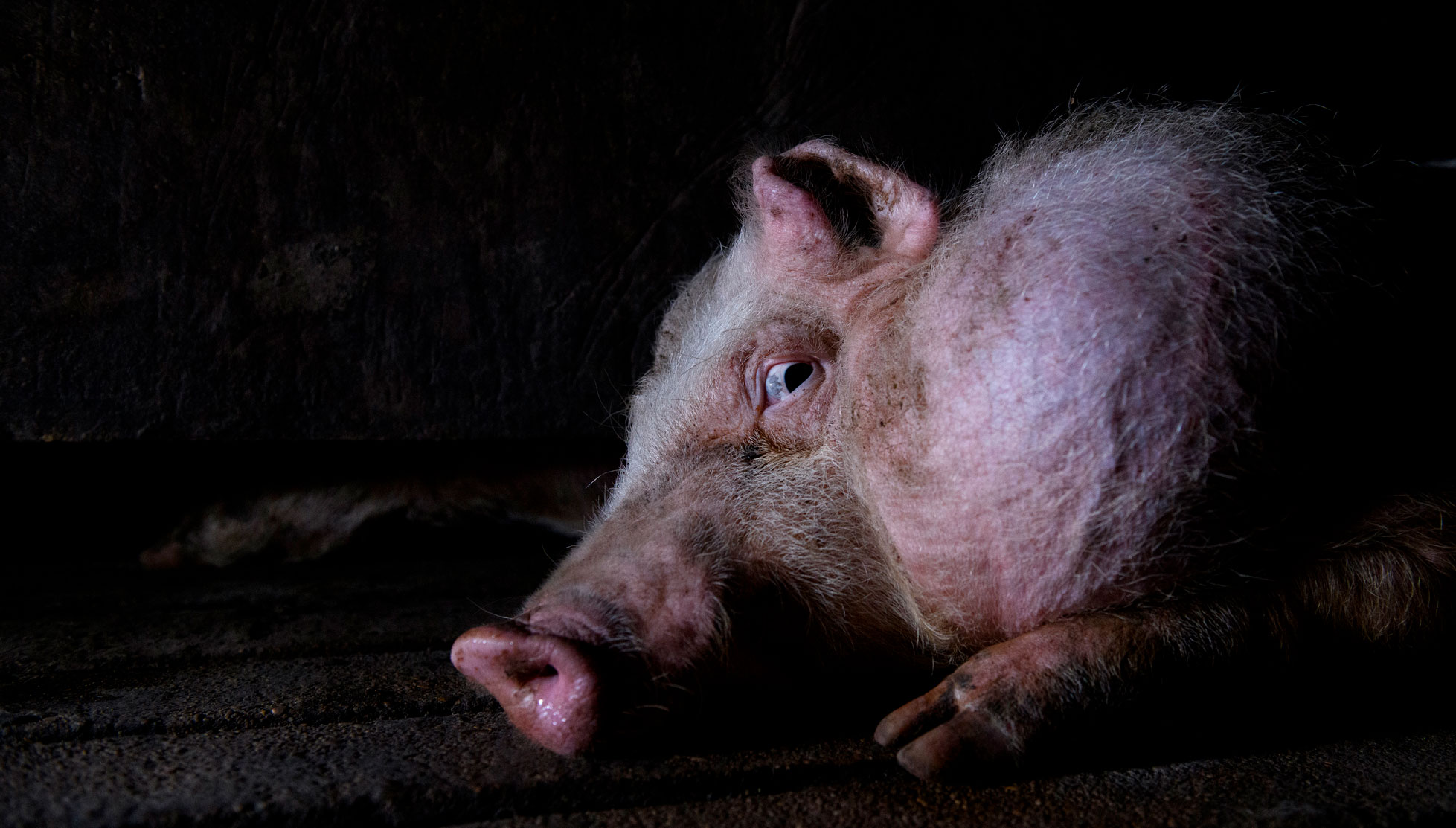
Every day, thousands of animals live and die in crowded and dirty conditions. This is the reality of industrial agriculture.
In Spain there are more pigs than people. The official figures for 2018 from the Ministry of Agriculture account for 52.4 million the number of animals taken to the slaughterhouse that year. Most of them are raised on mega-farms, where they suffer from the worst conditions imaginable. 84% of the 86,641 farms registered in the country use intensive systems, and are growing every year. Of the 43 million laying hens that live in Spanish territory, only 7% are alternative breeders, the rest live in cages. And in milk production, the average number of cows per farm has almost doubled in the last nine years. In Soria there is a dairy with 20,000 cows, the largest in Europe.